

The Critical Importance of Verifying Legal Credentials
In an era where digital marketing can make anyone appear as a seasoned professional, verifying the legitimacy of your legal counsel is no longer optional; it is an absolute necessity. The internet is flooded with sophisticated websites and polished advertisements for legal services. However, behind that glossy digital facade, the reality can be starkly different. Individuals facing legal crises are often vulnerable and desperate for help, making them prime targets for fraudulent practitioners or attorneys operating outside their licensed jurisdictions. Therefore, knowing how to independently verify lawyer credentials is a fundamental skill for any consumer of legal services.
The consequences of hiring an unlicensed or disciplined individual are catastrophic. If a person who is not legally authorized to practice law represents you, your case could be dismissed entirely, and you may lose your legal rights permanently. Furthermore, any money you paid to this fraudulent practitioner is likely gone forever. Even if the individual is a licensed attorney, a hidden history of ethical violations or malpractice claims indicates a severe risk to your financial and legal well-being.
Many consumers mistakenly believe that a sleek website or a high ranking on a search engine equates to professional legitimacy. This is a dangerous assumption. Search engines prioritize marketing algorithms, not legal ethics. To truly protect yourself, you must bypass the marketing materials and access objective, primary source data. The only definitive way to confirm an attorney’s standing is through official government and regulatory channels.
Fortunately, the process of verifying an attorney’s license and disciplinary history is entirely free and accessible to the public. State regulatory bodies have digitized their records, allowing you to perform comprehensive background checks from the comfort of your home. By taking a few minutes to utilize these official resources, you can secure peace of mind and ensure you are hiring a qualified, ethical professional.
Understanding the Role of the State Bar Association
In the United States, the practice of law is regulated at the state level, not the federal level. Each state has a supreme court or a designated regulatory body, commonly known as the State Bar Association, which oversees the licensing and disciplining of attorneys within its borders. To legally practice law in a specific state, an attorney must pass that state’s bar examination (or meet specific reciprocity requirements) and maintain active membership in good standing with the state bar.
Because regulation is state-specific, an attorney licensed in New York cannot automatically represent a client in a California state court. When you are searching for representation, your very first step must be confirming that the attorney is actively licensed in the jurisdiction where your legal issue is taking place. This is a non-negotiable requirement for competent legal representation.
The state bar association acts as the ultimate authority on an attorney’s professional status. They maintain the official, up-to-date registry of every individual authorized to practice law in that state. This registry is the only source of truth you should rely on when verifying credentials.
How to Access and Navigate State Bar Records
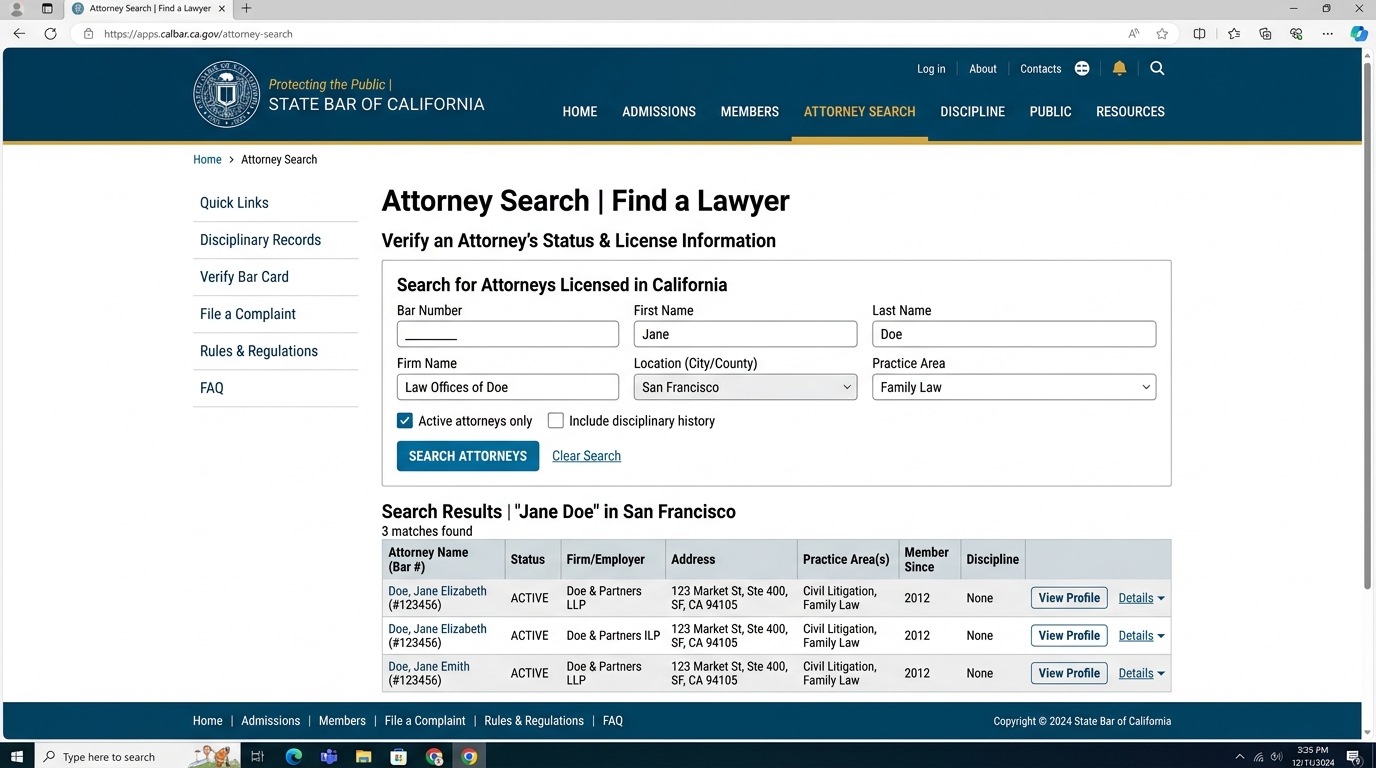
Accessing State Bar Records is a straightforward process. Begin by opening your web browser and searching for the name of your state followed by “State Bar Association attorney search” (e.g., “Texas State Bar Association attorney search” ). This query will direct you to the official regulatory website. Look for a portal labeled “Find a Lawyer,” “Attorney Search,” or “Licensee Lookup.”
Once you locate the search portal, you will typically need the attorney’s full legal name or their specific bar license number. Enter this information into the search fields. If the attorney has a common name, you may need to filter the results by their city or the name of their law firm to find the correct profile. When you open the attorney’s official profile, you will be presented with a wealth of critical information.
First and foremost, check their “License Status.” You are looking for a status that says “Active,” “Eligible to Practice,” or “In Good Standing.” If the status reads “Inactive,” “Suspended,” “Disbarred,” or “Not Eligible to Practice,” you must immediately cease contact with that individual. They do not have the legal authority to represent you, regardless of what they may claim in their marketing materials.
The profile will also list the date the attorney was admitted to the bar. This allows you to verify their actual years of experience, contrasting it with any potentially exaggerated claims made on their website. Furthermore, the profile will confirm their official business address and contact information, ensuring you are dealing with a legitimate, established practice rather than a fly-by-night operation.
Investigating Disciplinary History
Beyond verifying the active license status, the state bar profile provides the most crucial piece of consumer protection data: the attorney’s Disciplinary History. The regulatory body is required to publish records of any public sanctions, reprimands, suspensions, or disbarments the attorney has faced during their career.
Scroll down the attorney’s profile to the section labeled “Disciplinary Actions,” “Public Record,” or “Administrative Actions.” If this section is empty or states “No public record of discipline,” the attorney has a clean ethical history with the state bar. However, if there are entries in this section, you must investigate further. The website will usually provide links to the official court documents detailing the specific nature of the ethical violation.
Disciplinary actions can range from minor administrative errors, such as failing to pay bar dues on time, to severe ethical breaches, such as stealing client funds, lying to a judge, or abandoning cases. While a minor administrative infraction from a decade ago might not be a dealbreaker, a recent suspension for mishandling a client trust account is a massive red flag. You must read the disciplinary documents to understand the context and severity of the attorney’s past misconduct.
Verifying Federal and Specialized Court Admissions
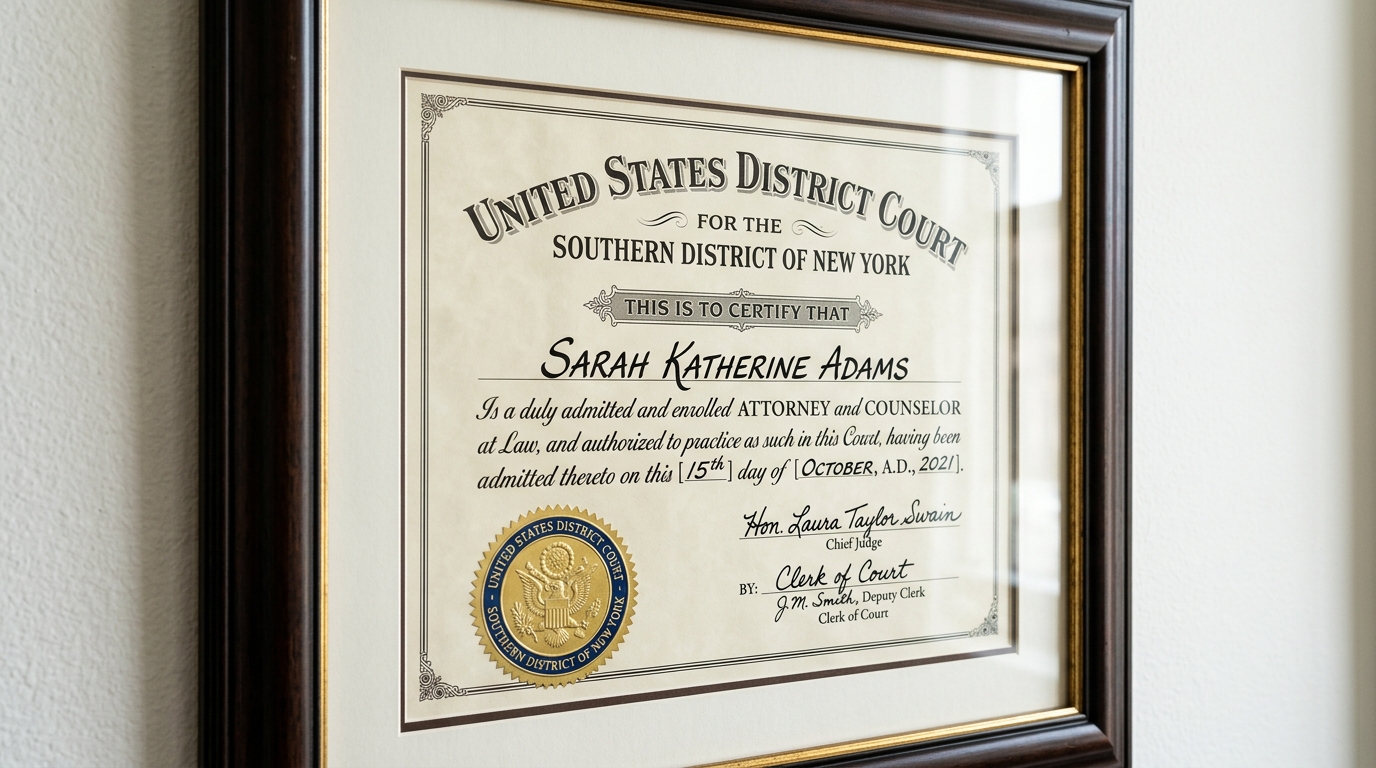
While state bar records cover the vast majority of legal practice, certain types of cases require additional verification. If your legal issue involves federal law—such as bankruptcy, federal criminal charges, patent disputes, or civil rights claims—the attorney must be specifically admitted to practice before the relevant federal court. A state bar license does not automatically grant an attorney the right to practice in a United States District Court.
To verify federal credentials, you must visit the specific website of the federal court where your case will be heard (e.g., the U.S. District Court for the Southern District of New York ). Most federal courts maintain their own attorney admission databases or require attorneys to register through the PACER (Public Access to Court Electronic Records) system. If the attorney claims to handle federal cases, you must confirm their admission to that specific federal jurisdiction.
Similarly, certain highly specialized areas of law require specific certifications. For example, to represent clients before the United States Patent and Trademark Office (USPTO), an attorney must pass a separate “patent bar” examination and be registered as a patent attorney. The USPTO maintains its own public database where you can verify this specific credential. Always ensure the attorney holds the precise qualifications required for your unique legal matter.
Finally, be wary of attorneys who boast about “specialist” certifications from private organizations. While some of these organizations are legitimate and require rigorous testing, others are essentially “pay-to-play” vanity credentials that offer no real proof of expertise. The American Bar Association provides guidance on which specialty certification programs are accredited and reputable. Always prioritize official state bar records and accredited certifications over flashy, unverified badges on a website.
The Final Step: Asking Direct Questions
After you have conducted your independent online verification, you should still address the topic of credentials during your initial consultation. A reputable attorney will not be offended if you ask to confirm their license status or inquire about their experience. In fact, ethical professionals appreciate clients who are diligent and informed.
If you discovered a past disciplinary issue during your research, you have the right to ask the attorney for their perspective on the event. Their willingness to discuss the matter openly and take responsibility for past mistakes can provide valuable insight into their current character. Conversely, if they become defensive, evasive, or attempt to lie about the public record, you should terminate the consultation immediately.
Verifying credentials is the bedrock of a secure attorney-client relationship. By taking the time to consult official state bar records and federal databases, you protect yourself from fraud and ensure that your legal advocate is genuinely qualified to fight for your rights. Do not skip this essential step in the hiring process.