

How to Check a Lawyer’s Disciplinary Record Before Hiring Them
Choosing an attorney is one of the most important decisions you can make when dealing with a legal problem. Whether you need help with a personal injury claim, a divorce, a criminal charge, an employment dispute, an estate plan, or a business conflict, the lawyer you hire may significantly influence your experience and the way your case is handled.
Many people begin their search by asking friends for recommendations, comparing law firm websites, and reading online reviews. These steps can be useful, but they do not tell the entire story. An attorney may have excellent marketing, a polished website, and numerous positive testimonials while having a disciplinary history that deserves closer examination. Another attorney may have a limited online presence but a strong professional record and substantial experience in the relevant area of law.
One of the most effective ways to make a more informed hiring decision is to learn how to check a lawyer’s disciplinary record through official regulatory sources. In the United States, lawyers are licensed and regulated primarily at the state level, and the procedures for accessing disciplinary information differ by jurisdiction. The American Bar Association (ABA) provides a useful starting point for locating the appropriate state authority.
Checking an attorney’s record does not mean assuming that every lawyer has done something wrong. It means verifying important professional information before entrusting someone with your money, confidential information, legal rights, or future.
This guide explains where to look, what different disciplinary outcomes mean, how to interpret official records, and what additional steps you can take before signing a legal services agreement.

Why Checking a Lawyer’s Disciplinary Record Matters
A disciplinary record can provide information about whether an attorney has faced formal professional sanctions for violating applicable ethical or professional rules. Depending on the jurisdiction and the case, publicly available records may describe misconduct involving client funds, conflicts of interest, dishonesty, neglect of legal matters, unauthorized practice, or other violations.
These records can help prospective clients identify issues that deserve additional questions before hiring an attorney. For example, a published suspension involving mishandling client money is relevant when you are considering whether to entrust that attorney with a settlement or substantial retainer. A record involving repeated failures to communicate may also warrant discussion if your case will require frequent updates and careful attention to deadlines.
However, disciplinary history should be evaluated fairly and in context. Not every complaint results in a finding of misconduct, and not every sanction has the same significance. The underlying decision, the conduct involved, the date of the incident, and any subsequent reinstatement or corrective action all matter.
A lawyer who received a minor sanction many years ago may have a different professional history from one who has repeatedly violated court orders or mishandled client funds. Treating these situations as identical would produce an incomplete assessment.
Checking official records also helps distinguish verified regulatory information from allegations circulating on review websites, social media, or discussion forums. A dissatisfied client may publish a harsh review without a disciplinary finding ever being made. Conversely, an attorney may have a public disciplinary order that does not receive much attention in online reviews.
The goal is not to find a lawyer with a supposedly perfect internet reputation. It is to gather reliable information and use it alongside qualifications, relevant experience, communication practices, fees, and your own assessment of the attorney.
Step 1: Identify the State Where the Lawyer Is Licensed
The first step is to determine which state or jurisdiction regulates the attorney you are considering.
In the United States, lawyer licensing is generally handled at the state level, often through a state supreme court, a state bar authority, or another designated regulatory body. This means that the correct place to search depends on where the attorney is admitted to practice.
For example, if you are considering a lawyer in California, begin with the State Bar of California’s official attorney search. If the attorney practices in Texas, Florida, New York, or another state, use the corresponding official licensing and disciplinary resources for that jurisdiction.
Do not assume that an attorney is licensed only in the state where the law office is located. Some lawyers hold licenses in several states, and an attorney may be admitted to practice in a jurisdiction different from the one in which you live.
The American Bar Association provides a helpful directory for locating state licensing authorities. Start here:
Official resource: American Bar Association — Lawyer Licensing
This resource helps consumers identify the relevant licensing agency for each state. Once you locate the correct authority, follow its instructions for searching attorney profiles and reviewing disciplinary information.
If a lawyer is admitted in more than one jurisdiction, consider checking each relevant state. A disciplinary action in one jurisdiction may be important even if the attorney maintains an active license elsewhere.
It is also worth checking whether the lawyer’s practice requires admission in a particular state. For example, a person handling litigation in a state court may need the appropriate admission or authorization for that jurisdiction. Special rules can apply to federal courts, temporary practice, and particular legal proceedings.
Step 2: Find the Official Attorney Search Tool
Once you identify the relevant state, visit the official website of its lawyer licensing authority.
Look for sections labeled “Attorney Search,” “Attorney Directory,” “Lawyer Registration,” “Attorney Status,” “Discipline,” or “Attorney Records.” The exact terminology differs among jurisdictions, so you may need to explore the site’s public resources.
Official attorney directories commonly provide some combination of the lawyer’s name, license number, admission date, registration status, business address, and publicly available disciplinary information. The amount of detail varies by state.
Enter the attorney’s full name as accurately as possible. If the search returns several people with similar names, compare additional identifying details, such as the middle initial, office location, license number, or admission date. Never assume that a disciplinary order involving someone with the same name necessarily refers to the lawyer you are researching.
If the search tool allows you to search by license number, that can help narrow the results. Ask the attorney for the license number if necessary, then independently verify it through the official source.
Be cautious when using commercial attorney directories as your primary source. Private websites can provide useful background information, practice-area descriptions, and client feedback, but their records may be incomplete or outdated. An official licensing authority is generally the more appropriate source for verifying current licensing status and formal regulatory actions.
If the state website does not offer an obvious disciplinary search, look for its attorney regulation office or disciplinary counsel. You can also use the ABA’s Resources for the Public page to find information about complaints and disciplinary agencies.
A failed online search does not necessarily establish that an attorney has no disciplinary history. Some records may require a separate search, a written request, or direct contact with the relevant agency.
Step 3: Verify That the Lawyer Is Currently Authorized to Practice
Finding an attorney’s name in a state directory is a useful beginning, but it is not the end of the process.
You should determine whether the lawyer is currently authorized to practice in the relevant jurisdiction. Depending on the state, the directory may describe the attorney as active, inactive, suspended, retired, resigned, disbarred, or otherwise subject to a particular status.
These terms are not interchangeable, and their legal consequences can differ by jurisdiction.
An active status generally indicates that the lawyer meets the jurisdiction’s requirements for active practice, subject to any specific limitations or restrictions shown in the official record. An inactive status may mean the attorney is not currently authorized to practice in the ordinary way, although the precise implications depend on state rules.
A suspended attorney may be prohibited from practicing for a specified period or until certain conditions are satisfied. A disbarred attorney has been removed from the profession’s authorized practicing status under the applicable disciplinary process, although rules regarding reinstatement differ among jurisdictions.
Other status changes may reflect administrative matters rather than a finding of misconduct. Therefore, read the status description and any linked order rather than relying on a single label.
If an attorney’s status is unclear, contact the regulatory agency directly. Ask whether the attorney is currently authorized to represent clients in the jurisdiction and whether any public restrictions affect that authorization.
Do not rely solely on an attorney’s website, business card, email signature, or social media profile. Those materials may not reflect a recent change in professional status.
This check is especially important when hiring someone you have never worked with before or when the attorney has recently moved between states, changed firms, or returned to practice after an extended absence.
Step 4: Search for Formal Disciplinary Actions
After verifying the lawyer’s identity and current status, look for publicly available disciplinary decisions, orders, and sanctions.
Depending on the state, disciplinary information may appear in the attorney directory, a separate disciplinary database, court opinions, official notices, or a searchable collection of orders issued by the state’s highest court or another authorized body.
Search for the lawyer’s full name and, where available, their bar number. If the website provides a separate discipline search, use that as well.
The ABA’s National Lawyer Regulatory Data Bank is another useful resource. It collects information on public regulatory actions involving lawyers across participating jurisdictions. The ABA explains that the public may request individual name verification and information about regulatory actions, subject to its procedures.
You can learn more here: ABA National Lawyer Regulatory Data Bank.
This resource is particularly useful when an attorney has practiced in more than one state or when you need help identifying public disciplinary information beyond a single state’s online directory. It should complement, rather than replace, a search of the official jurisdiction where the lawyer is licensed.
When a disciplinary entry appears, open the underlying decision or order if one is available. A short directory notation may not explain what happened, what rule was violated, how serious the conduct was, or whether the attorney has since satisfied the requirements of a sanction.
Also pay attention to the date. An old order may have been followed by reinstatement, further discipline, or other developments. The most useful assessment considers the entire publicly documented sequence rather than one isolated entry.
Step 5: Understand the Difference Between a Complaint and a Disciplinary Finding
One of the most important parts of reviewing an attorney’s record is understanding the difference between an allegation and an established disciplinary outcome.
A complaint is a report that someone believes a lawyer engaged in improper conduct. It may be submitted by a client, another attorney, a judge, or another person with relevant information. The filing of a complaint does not, by itself, prove that the attorney violated a professional rule.
The regulatory authority may review the complaint, request additional information, investigate the allegations, dismiss the matter, pursue formal charges, or take other steps allowed under its procedures. The exact process and the information available to the public vary by jurisdiction.
A formal charge is not necessarily the same as a final finding of misconduct. It generally means that allegations have advanced to a more formal stage, but the outcome must still be determined according to the applicable process.
A final disciplinary order or decision may establish that a violation occurred and impose a sanction. That record carries a different significance from an unverified allegation or a complaint that was dismissed.
Confidentiality rules also matter. Some jurisdictions restrict access to complaints or investigations before particular procedural stages, while others make certain information available earlier. Consequently, the absence of a publicly searchable complaint does not establish that no complaint has ever been filed.
The ABA provides consumer guidance on these distinctions and explains how to locate the appropriate state disciplinary agency. Read its Consumer FAQs about lawyer licensing and complaints.
For consumers, the practical rule is simple: do not treat an allegation as proof, and do not treat the absence of publicly visible information as conclusive proof of an unblemished record.
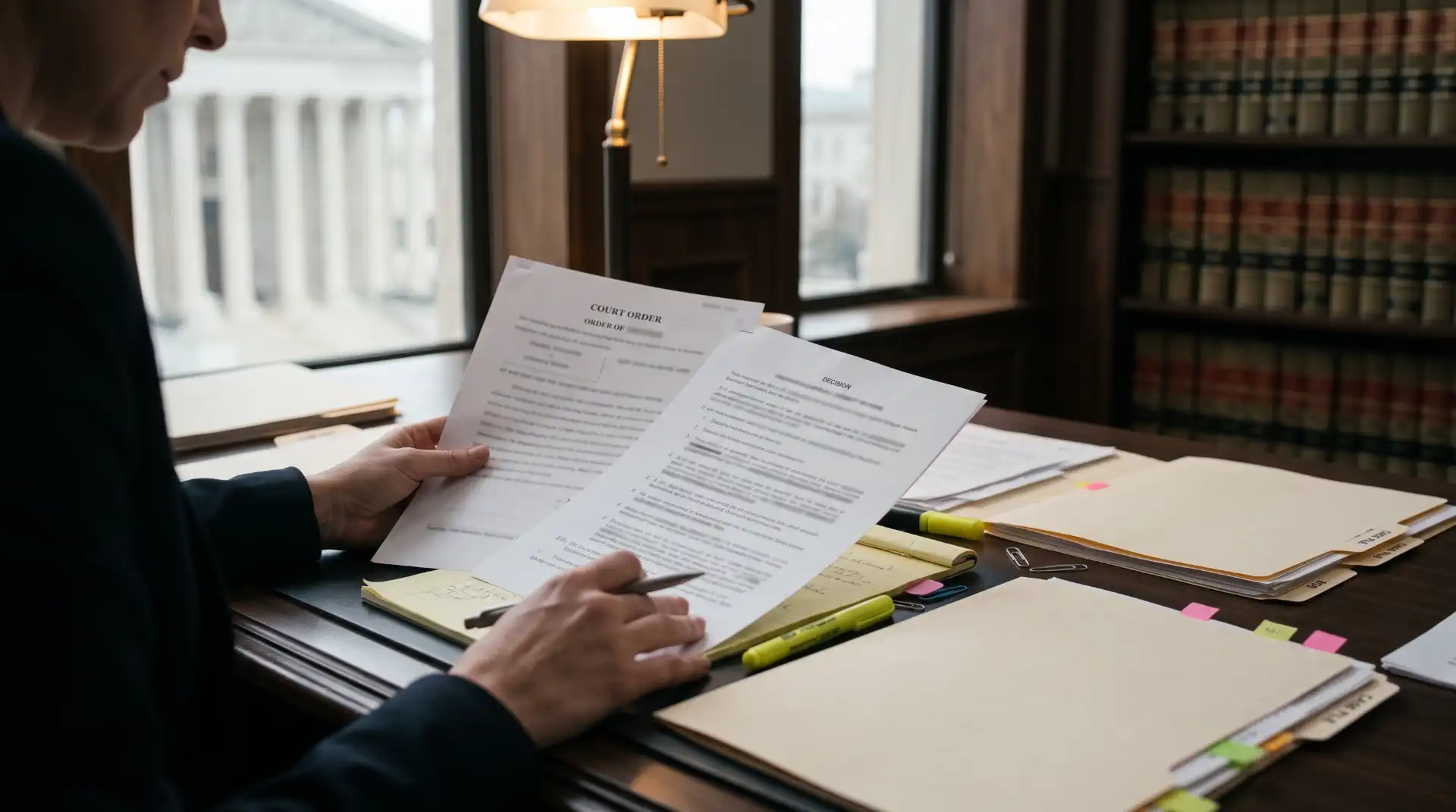
Step 6: Learn What Different Disciplinary Sanctions Mean
Disciplinary sanctions are intended to address professional misconduct and protect the public, the courts, and the integrity of legal practice. Their meaning depends on the applicable jurisdiction, the underlying facts, and the terms of the order.
Private or public admonition and reprimand
Some jurisdictions use terms such as admonition, reprimand, or censure for forms of professional discipline. These may reflect different levels of severity or different procedural outcomes under local rules.
Some admonitions or other measures may be private, while reprimands and similar sanctions may be public. The terminology is not uniform throughout the United States.
If you find a reprimand in an attorney’s history, read the decision to understand the specific conduct involved. A sanction related to a limited administrative or procedural failure may raise different questions from one involving dishonesty, client funds, or repeated neglect.
Suspension from practice
A suspension generally restricts an attorney’s ability to practice law for a specified period or until required conditions are satisfied. The order may also impose obligations relating to client notification, pending cases, trust accounts, or other professional responsibilities.
When reviewing a suspension, look for its effective date, duration, conditions, and any subsequent order concerning reinstatement. Do not assume that the passage of time alone means the lawyer is authorized to practice again.
If the lawyer claims to have returned to practice, verify that status with the appropriate regulatory authority.
Disbarment
Disbarment is a serious professional sanction that removes an attorney’s authorization to practice under the jurisdiction’s applicable rules. Reinstatement, where permitted, generally requires a formal process and is not automatic.
If a record shows disbarment, confirm whether there is a later official order affecting the attorney’s status. Do not rely on a lawyer’s own explanation without independently checking the relevant court or licensing authority.
Probation and conditional discipline
Some jurisdictions permit forms of discipline that place conditions on an attorney’s practice or require compliance with specified obligations. These may include monitoring, education, reporting, or other requirements, depending on the order.
A probationary or conditional outcome should be evaluated according to its actual terms. The important question is not simply what label appears in a directory, but what the order requires and whether the attorney remains authorized to handle your matter.
Restitution and client protection measures
A disciplinary order may require an attorney to make restitution or satisfy other financial obligations. Such a requirement may be particularly relevant when the misconduct involved client funds or financial losses.
However, a restitution order does not automatically tell you whether a particular client has been fully compensated. Review the underlying decision and any available subsequent records before drawing conclusions.
Across all these categories, the same principle applies: read the official order, identify the conduct at issue, and verify the attorney’s present status before deciding what the record means for your situation.
Step 7: Look for Patterns, Not Just Isolated Events
An isolated disciplinary event should not automatically determine your hiring decision. At the same time, multiple related findings may deserve closer attention.
When reviewing public records, look for repeated issues involving similar conduct. For example, several findings concerning missed deadlines, failures to communicate, or mishandling of client funds may raise different concerns from a single older sanction involving a narrow administrative requirement.
The context matters. Consider whether the incidents occurred over a short or long period, whether they involved different clients, and whether later orders indicate that the lawyer has taken steps required by the regulator.
Do not confuse multiple documents about one disciplinary matter with multiple independent violations. A single case may generate a complaint record, a formal order, a published opinion, and a reinstatement notice. These documents may describe different stages of the same proceeding.
Similarly, two attorneys with disciplinary histories should not automatically be considered equally unsuitable. The underlying conduct, severity, timing, recurrence, and current status may be substantially different.
A careful review focuses on evidence rather than assumptions. If you find a pattern that concerns you, ask the attorney a direct, professional question about the public record and assess whether the explanation is consistent with the official documents.
You are not required to make a legal determination about every past incident. You are gathering information to decide whether the attorney’s qualifications, professional history, and approach meet your needs.
Step 8: Check Whether the Lawyer Has Been Disciplined in Other States
Many attorneys are admitted to practice in multiple jurisdictions. An attorney may have an active license in one state and a separate disciplinary history in another.
If the lawyer lists multiple state admissions on a professional profile, verify each one through its official licensing authority. Look for current status information and public disciplinary orders in every relevant jurisdiction.
This is especially useful when hiring lawyers who handle federal litigation, national business matters, multistate transactions, or cases involving clients in several states. The appropriate admissions and authorization requirements depend on the work being performed, so do not assume every listed jurisdiction is relevant to your particular matter.
The ABA’s National Lawyer Regulatory Data Bank may help identify public regulatory actions across participating jurisdictions. Nevertheless, its coverage and search procedures should be understood before relying on it as a complete national background check.
You may need to contact a state disciplinary agency directly if records are not available online or if the search returns incomplete information.
It is also sensible to confirm the attorney’s identity across states. Similar names can lead to confusion, and a disciplinary record must be connected to the correct individual before it is used in a hiring decision.
Step 9: Use Online Lawyer Reviews as a Supplement
Online reviews can help you learn about a law firm’s communication style, responsiveness, billing practices, and client-service experience. They are not a substitute for official disciplinary records.
A review platform may contain genuine client experiences, subjective opinions, misunderstandings, incomplete accounts, or content that cannot be independently verified. The presence of positive reviews does not prove that a lawyer has never been disciplined. Likewise, one negative review does not establish professional misconduct.
When evaluating reviews, look for recurring themes rather than focusing entirely on star ratings. Several detailed reviews independently describing delayed responses or unclear billing may justify asking questions about communication and fees.
Consider the dates of the reviews, the nature of the legal work, and whether the comments concern factors relevant to your own case. A lawyer may have an excellent reputation in one practice area but limited experience with the particular matter you need help resolving.
For additional context, compare reviews with the lawyer’s professional biography, court experience, qualifications, fee agreement, and official licensing status. This produces a more balanced picture than relying on any single source.
LawyerReviews.net can serve as one part of that research process by helping readers think critically about attorney reputation and client feedback. Readers should combine review-based research with independent verification through official state authorities.
Ultimately, reviews help you understand the client experience, while official disciplinary records help you investigate documented regulatory outcomes. Both can be informative when interpreted appropriately.
Step 10: Ask the Lawyer About Any Record You Find
If your research uncovers a disciplinary order, consider asking the attorney for an explanation before deciding whether to proceed.
You do not need to be confrontational. Explain that you are conducting due diligence and found a public record you would like to understand. Ask the attorney to clarify the circumstances, the outcome, and whether any restrictions remain in effect.
For example, you might ask:
“I found a publicly available disciplinary order associated with your name. Could you explain the circumstances and confirm your current authorization to practice in this state?”
This approach gives the lawyer an opportunity to clarify the record without treating an initial search result as a complete account.
Pay attention to whether the response addresses the actual documents. An attorney may provide relevant context, point you to a later reinstatement order, or explain that a record concerns someone else with a similar name. These explanations should be checked independently where possible.
Be cautious if the lawyer refuses to clarify an apparently relevant public record, pressures you to stop asking reasonable questions, or provides an explanation that directly conflicts with official information.
At the same time, avoid demanding confidential information about other clients or matters that the attorney cannot ethically disclose. You are entitled to make an informed hiring decision, but a lawyer may be limited in what can be shared about particular circumstances.
If you remain uncertain, you can consult another attorney or contact the regulatory authority for clarification about public records and current status.
Step 11: Evaluate Experience, Communication, and Fees Alongside Discipline
A disciplinary check is an important part of attorney selection, but it should not be the only consideration.
First, examine the lawyer’s experience with cases similar to yours. An attorney who primarily handles estate planning may not be the best choice for a complicated commercial dispute, even if the attorney has no public disciplinary history.
Second, assess communication. Ask who will handle your case, how often you can expect updates, and how quickly the firm generally responds to client questions. Confirm whether you will work directly with the attorney or primarily with associates and staff.
Third, review the fee arrangement. Request a written explanation of hourly rates, retainers, flat fees, contingency arrangements where applicable, litigation expenses, and any circumstances that may generate additional charges.
Fourth, discuss realistic expectations. No ethical lawyer can guarantee a particular outcome in a case that depends on facts, evidence, opposing parties, and court decisions. Be wary of promises that you will definitely win or recover a specific amount regardless of the circumstances.
Finally, consider whether you feel comfortable sharing sensitive information with the attorney. Trust, professional judgment, clear expectations, and respectful communication are essential parts of the working relationship.
A lawyer with no public disciplinary record may still be a poor fit for your needs. Another attorney with an old, relatively minor sanction may have substantial relevant experience and a professional record that merits a fair assessment. The right decision depends on the complete picture, not a single data point.
Step 12: Know What to Do If You Cannot Find a Record
Sometimes an attorney search produces no disciplinary results. That outcome should be interpreted carefully.
It may mean that no public disciplinary action appears in the database you searched. It may also mean that the database does not include all relevant records, that an action is not publicly accessible, that the lawyer uses a different name, or that the search was conducted in the wrong jurisdiction.
Some disciplinary proceedings are confidential at particular stages, and public databases may differ in their scope and updating practices. A search that returns no results cannot establish that no complaint has ever been filed or that the attorney has never faced any professional concern.
Start by checking the spelling of the attorney’s full name and confirming the state in which the lawyer is licensed. Search the official attorney directory and any separate disciplinary records database. If the lawyer has multiple admissions, repeat the process in the other relevant states.
If the result remains unclear, contact the state licensing or disciplinary agency. Ask what public records are available, how current the online search is, and whether the agency offers an official status verification process.
The ABA’s public resources can help you identify the correct agency. In some circumstances, the ABA National Lawyer Regulatory Data Bank may also provide name verification through its established procedures.
Keep a record of the sources you checked and the date of your search. This can help you repeat the verification shortly before hiring the lawyer if your decision takes several weeks or months.

Step 13: Recognize Warning Signs During the Hiring Process
Disciplinary records are only one part of due diligence. Certain behaviors during the hiring process may also justify further questions.
For example, be cautious if a person claims to be an attorney but refuses to identify the state in which they are licensed, will not provide a verifiable professional name, or gives inconsistent information about their law office.
Other concerns include demands for immediate payment without a clear written agreement, vague explanations of what the fee covers, promises of guaranteed legal outcomes, and pressure to transfer money through unusual channels.
These signs do not automatically prove misconduct or fraud. They do, however, give you a reason to slow down and verify the person’s identity, licensing status, and business arrangements before proceeding.
Use independently obtained contact details when contacting a licensing agency or law office. If you suspect someone is impersonating a real attorney, do not assume that a genuine bar directory entry proves the person contacting you is that lawyer.
If you have already paid money and suspect misconduct, preserve contracts, invoices, receipts, emails, messages, and relevant case documents. Contact the appropriate state disciplinary authority or consumer protection agency to ask about the correct reporting process. If a court deadline or active legal matter is involved, seek independent legal advice promptly so that your case is not jeopardized while you investigate.
Step 14: Understand the Limits of Attorney Discipline Records
Disciplinary records are valuable, but they do not provide a complete measure of a lawyer’s ability, judgment, or suitability for every case.
An attorney may have no publicly available disciplinary record yet lack experience in your specific legal issue. Another may have substantial courtroom experience but poor communication practices. A third may have received a sanction years ago and subsequently met all regulatory requirements.
A disciplinary database also may not reveal every complaint, particularly when a matter is confidential or did not result in a public action. The absence of a record should not be treated as a guarantee of future professional conduct.
Conversely, a public sanction should not be interpreted without examining the underlying facts and subsequent developments. The severity of the conduct, its relationship to the work you need, the attorney’s current status, and any pattern of repeated violations all deserve consideration.
The most reliable approach combines official records, relevant experience, transparent fees, client-service information, and direct questions. This method does not eliminate every risk, but it can help you make a more informed decision before entering a professional relationship.
A Practical Checklist Before Hiring a Lawyer
Before signing a retainer agreement, take a few minutes to confirm that you have completed the essential checks. Verify the lawyer’s identity and current license through the appropriate state authority, search for publicly available disciplinary actions, and read the underlying orders for any relevant results.
If the attorney practices in multiple states, check the other relevant jurisdictions as well. Ask questions about any record that concerns you, and confirm whether the lawyer is currently authorized to handle the type of matter you are considering.
Review the attorney’s experience, fee agreement, communication practices, and proposed approach to your case. Save the official sources you consulted so that you can return to them if your circumstances change.
Most importantly, do not make your decision based solely on a star rating, a polished website, a personal recommendation, or the absence of negative information online. Each source provides only part of the picture.
Taking these steps before hiring a lawyer can help you identify concerns early, set clear expectations, and choose representation with greater confidence.
Frequently Asked Questions
How do I check whether a lawyer has been disciplined?
Start with the official attorney directory and disciplinary agency for the state where the lawyer is licensed. Search by the attorney’s full name, review any publicly available disciplinary entries, and read the underlying orders. If the lawyer holds licenses in multiple states, check each relevant jurisdiction.
Is there a national database for lawyer disciplinary records?
The American Bar Association operates the National Lawyer Regulatory Data Bank, which collects information on public regulatory actions from participating jurisdictions. It provides a useful national resource, but you should also check the relevant state licensing authority because coverage and access procedures may vary.
Does a complaint mean that a lawyer has committed misconduct?
No. A complaint contains allegations that may require investigation. It is not automatically proof of wrongdoing. Look for the official outcome, including whether the matter was dismissed, resulted in formal charges, or led to a disciplinary order.
Can a lawyer have a disciplinary record and still practice law?
Yes, depending on the type of discipline, the terms of the order, and the lawyer’s current status. Some sanctions do not prohibit practice, while a suspension or disbarment can restrict or remove authorization to practice. Always verify the current status through the appropriate authority.
What is the difference between suspension and disbarment?
Suspension generally restricts practice for a period or until specified conditions are met. Disbarment removes authorization to practice under the applicable jurisdiction’s rules. Reinstatement procedures and eligibility vary, so consult the official order and current licensing record.
What if the state bar website shows no disciplinary history?
A search with no results means that no relevant public record appeared in that particular search. It does not necessarily prove that no complaint or confidential proceeding has ever existed. Confirm the lawyer’s identity, search other relevant official sources, and contact the regulatory agency if necessary.
Should I avoid a lawyer who has received a reprimand?
Not automatically. Review the underlying conduct, the date, the seriousness of the violation, and any subsequent disciplinary history. Consider whether the issue is relevant to your case and ask the lawyer for clarification. Make your decision based on the full record rather than the sanction’s label alone.
Can I check a lawyer’s disciplinary record before paying a retainer?
Yes. Checking publicly available records before signing an agreement or paying substantial fees is a sensible due diligence step. You can also ask for the attorney’s license details, a written fee agreement, and clarification about who will handle your case.
Where can I report suspected attorney misconduct?
Contact the official lawyer disciplinary agency in the jurisdiction where the attorney is licensed or where the relevant conduct occurred. The agency can explain its complaint procedures and jurisdiction. Keep in mind that a disciplinary agency’s role is generally to address professional conduct, not to act as your personal lawyer or resolve every underlying dispute.
Are online lawyer reviews enough to evaluate an attorney?
No. Reviews can help you understand communication, responsiveness, and client experience, but they may be subjective or incomplete. Combine them with official licensing and disciplinary records, relevant experience, clear fee terms, and a direct consultation before making your decision.
Conclusion: Make an Informed Decision Before Hiring an Attorney
Learning how to check a lawyer’s disciplinary record is a practical way to protect yourself when searching for legal representation in the United States. Official state licensing records, published disciplinary decisions, and appropriate regulatory databases can help you verify an attorney’s status and understand any publicly documented professional sanctions.
The process is straightforward: identify the relevant jurisdiction, confirm the lawyer’s identity and current authorization to practice, search for disciplinary actions, read the underlying documents, and investigate any questions that remain. If the attorney practices in multiple states, check each relevant jurisdiction.
Remember that disciplinary records are only one part of a responsible hiring decision. Experience, communication, transparency, fees, and professional judgment also matter. A complaint is not proof of misconduct, and a clean public search is not a guarantee of future performance.
By combining official verification with careful research and direct questions, you can make a more informed choice about who will represent you and handle your legal concerns.
At LawyerReviews.net, informed decisions begin with asking the right questions and looking beyond surface-level ratings. Take time to verify the facts before hiring an attorney, and choose representation that fits your legal needs and expectations.
Disclaimer: This article is for general educational purposes only and does not constitute legal advice. Lawyer licensing, disciplinary procedures, and public-record access rules vary by jurisdiction. Consult the appropriate official regulatory authority or a qualified attorney for guidance about a specific situation.