

Demystifying the Cost of Legal Representation
One of the most significant barriers preventing individuals from seeking legal help is the fear of unknown costs. The legal industry has long been criticized for its opaque billing practices, leaving clients anxious about receiving exorbitant, unexpected invoices. Understanding how lawyers charge for their services is the first critical step toward taking control of your legal situation. By demystifying these financial arrangements, you can approach the hiring process with confidence and clarity. Ultimately, financial transparency is essential for a healthy attorney-client relationship.
Historically, the billable hour was the undisputed standard across nearly all legal practice areas. However, as consumer demand for alternative billing arrangements has grown, the industry has evolved. Today, attorneys utilize a variety of fee structures depending on the nature of the case and the financial situation of the client. The two most prominent methods remain the hourly rate and the contingency fee. Knowing which structure applies to your specific legal issue is vital for your financial planning.
It is important to recognize that fee structures are not arbitrary; they are deeply tied to the risk and predictability of the legal work involved. For example, drafting a standard will involves predictable effort, whereas a complex personal injury trial carries significant financial risk for the law firm. Consequently, attorneys align their billing methods with these inherent risks. Educating yourself on these alignments helps you evaluate whether a proposed fee agreement is fair and customary.
Before signing any documents, you must have a candid conversation with your prospective attorney about money. A reputable lawyer will welcome this discussion and provide clear, straightforward answers. If an attorney is evasive about their rates or refuses to put their fee structure in writing, you should view that as a serious warning sign. Transparency regarding costs is a fundamental ethical obligation in the legal profession.
The Mechanics of Hourly Billing
Hourly billing remains the most common fee structure for practice areas such as family law, corporate litigation, and criminal defense. Under this arrangement, the attorney charges a set rate for every hour (or fraction of an hour) they spend working on your case. This includes time spent researching, drafting documents, making phone calls, and appearing in court. The specific hourly rate varies wildly based on the attorney’s experience, geographic location, and the complexity of the legal matter.
When you agree to Hourly Billing, you will typically be required to pay an upfront deposit known as a retainer. The attorney places this retainer into a special trust account and deducts their hourly fees from that balance as work is performed. Once the retainer is depleted, you will be asked to replenish it to ensure continued representation. It is crucial to understand that a retainer is not a flat fee; it is merely an advance payment against future hourly charges.
To protect yourself under an hourly arrangement, you must insist on receiving detailed, itemized monthly invoices. These invoices should break down exactly what tasks were performed, who performed them, and how much time was spent on each task. Reviewing these bills carefully allows you to monitor the progress of your case and question any charges that seem excessive. Diligent oversight of your legal bills is your responsibility as an informed client.
Understanding the Contingency Fee Model
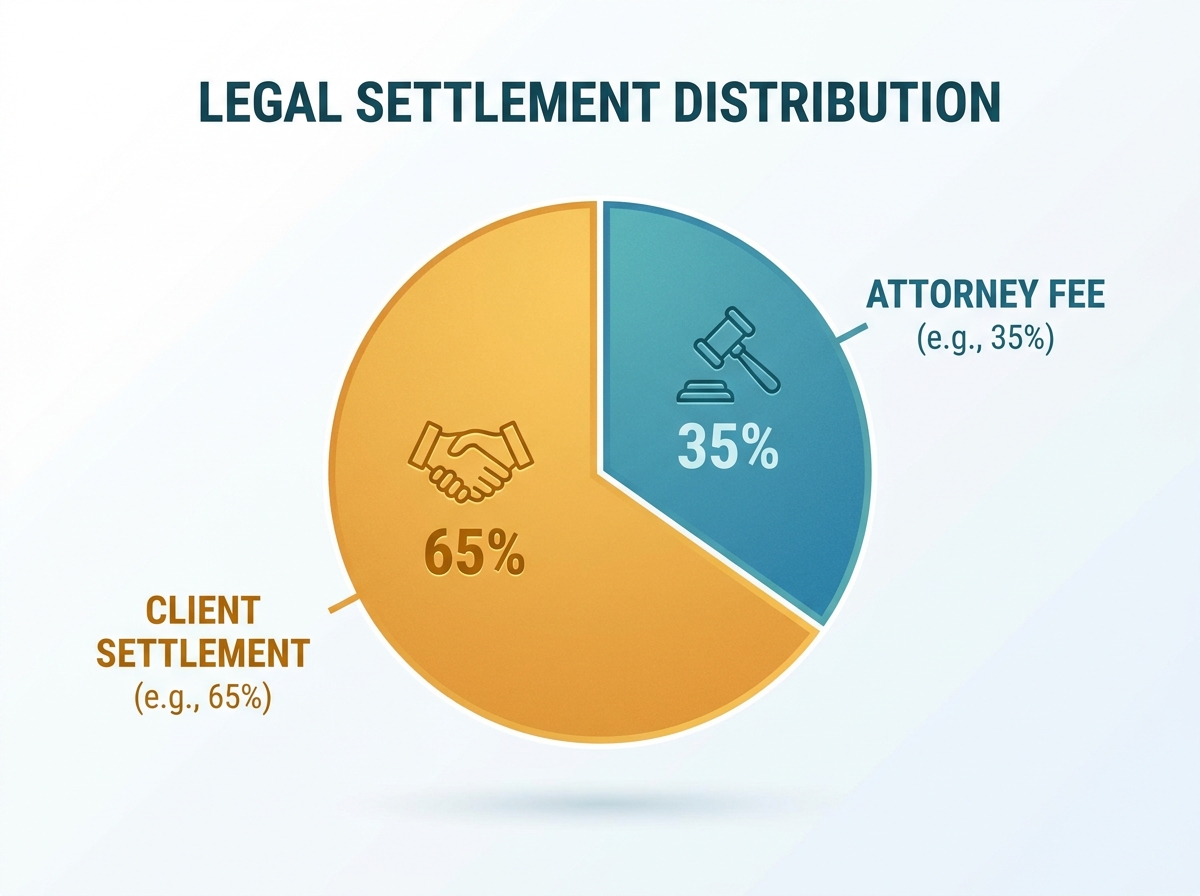
In stark contrast to hourly billing, the contingency fee model requires no upfront payment for attorney time. Instead, the lawyer agrees to accept a fixed percentage of the final financial recovery in your case. If you do not win your case or secure a settlement, the attorney does not receive a fee for their labor. This arrangement is most prevalent in personal injury, medical malpractice, and certain employment law cases where a financial payout is the primary goal.
The standard Contingency Fees percentage typically ranges from 33% to 40% of the total recovery. However, this percentage can fluctuate based on when the case is resolved. For instance, an attorney might charge 33% if the case settles before a lawsuit is filed, but increase the rate to 40% if the case proceeds to a full trial. This escalating scale reflects the significant increase in time, resources, and risk required to litigate a case in court.
The primary advantage of a contingency fee is that it provides access to the justice system for individuals who cannot afford to pay hourly rates. It also aligns the financial interests of the attorney and the client; the more money you recover, the more the attorney earns. This shared incentive often motivates lawyers to aggressively pursue the maximum possible settlement. For many injured plaintiffs, this fee structure is the only viable path to legal representation.
However, it is vital to understand the distinction between “attorney fees” and “case costs.” Even in a contingency arrangement where you pay no upfront fees, you may still be responsible for the out-of-pocket costs associated with pursuing the lawsuit. These costs can include court filing fees, expert witness payments, and expenses for obtaining medical records. Always clarify who is responsible for these costs if the case is lost.
Comparing the Financial Risks
When evaluating these two billing methods, the concept of risk allocation is paramount. With hourly billing, the client bears almost all the financial risk. You must pay the attorney regardless of whether you win or lose your case. In protracted litigation, hourly fees can quickly escalate into tens or even hundreds of thousands of dollars, potentially bankrupting a client before a resolution is reached.
Conversely, the contingency fee shifts the financial risk of the attorney’s time onto the law firm. The lawyer invests hundreds of hours of labor with the very real possibility of receiving zero compensation if the case is unsuccessful. Because the law firm is taking on this substantial risk, the eventual payout in a successful contingency case is often higher than what the attorney would have earned billing hourly. This premium compensates the firm for the cases they inevitably lose.
Therefore, you cannot typically choose between these two structures for the same type of case. An attorney will not take a divorce case on contingency because it is ethically prohibited and there is rarely a pool of money from which to draw a percentage. Similarly, few clients would choose to pay a personal injury lawyer by the hour when a contingency option is available. The nature of your legal problem dictates the billing structure.
The Importance of the Written Engagement Agreement

Regardless of whether you are paying hourly or via contingency, the terms of your financial arrangement must be explicitly detailed in a written contract. This document, often called a retainer agreement or an Engagement Agreements, is the binding contract between you and your lawyer. The American Bar Association mandates that contingency fee agreements must be in writing and signed by the client.
A comprehensive engagement agreement should clearly define the scope of the representation. It must state exactly what legal services the attorney will perform and, equally importantly, what services are excluded. For hourly agreements, it must list the specific rates for every person who might work on your file, including paralegals and junior associates. Ambiguity in the engagement agreement inevitably leads to billing disputes down the line.
Take the time to read every clause of the engagement agreement before signing. Pay special attention to the sections detailing how case costs are handled, how the agreement can be terminated, and what happens to your retainer if you fire the attorney. If you do not understand a specific provision, ask the attorney to explain it or modify the language. You have the right to negotiate the terms of your legal representation.
Do not let the pressure of your legal situation force you into signing a financial agreement you do not fully comprehend. A trustworthy attorney will encourage you to take the document home, review it carefully, and ask questions. By ensuring that your fee structure is transparent, fair, and documented in writing, you establish a solid foundation for a successful attorney-client relationship.
Managing Legal Costs Effectively
Once you have hired an attorney, you can take proactive steps to manage your legal costs, particularly under an hourly arrangement. The most effective strategy is to communicate efficiently. Instead of calling your lawyer every day with a single question, compile your questions and address them in one weekly email. Because lawyers bill in increments (often six or fifteen minutes ), frequent short interruptions can drastically inflate your bill.
Furthermore, be highly organized when providing documents to your legal team. If you hand your lawyer a shoebox full of unsorted receipts, you are paying their hourly rate to act as a filing clerk. Organize your files chronologically, create summaries, and provide clear explanations of the documents. Doing the administrative legwork yourself is one of the easiest ways to reduce your overall legal expenses.
Finally, maintain a realistic perspective on the cost-benefit analysis of your legal strategy. Fighting a minor issue on principle can cost you far more in attorney fees than the issue is actually worth. Rely on your attorney’s objective advice regarding when to settle and when to litigate. By understanding the financial mechanics of legal representation, you can make strategic decisions that protect both your legal rights and your wallet.